

Cowhide Print Car Seat Covers Review: Are They Worth It?
Posted by YourCarButBetter on
Cowhide print car seat covers review results are straightforward: they are a practical styling accessory for drivers who want a bold interior refresh and a barrier against everyday dirt, pet hair, spills, and friction. Their value depends less on the pattern itself and more on seat compatibility, installation stability, material-specific care, and whether the product accommodates your vehicle’s safety features.
What Cowhide Print Seat Covers Actually Offer
 Cowhide Print Car Seat Covers Review: Are They Worth It? - What Cowhide Print Seat Covers Actually Offer
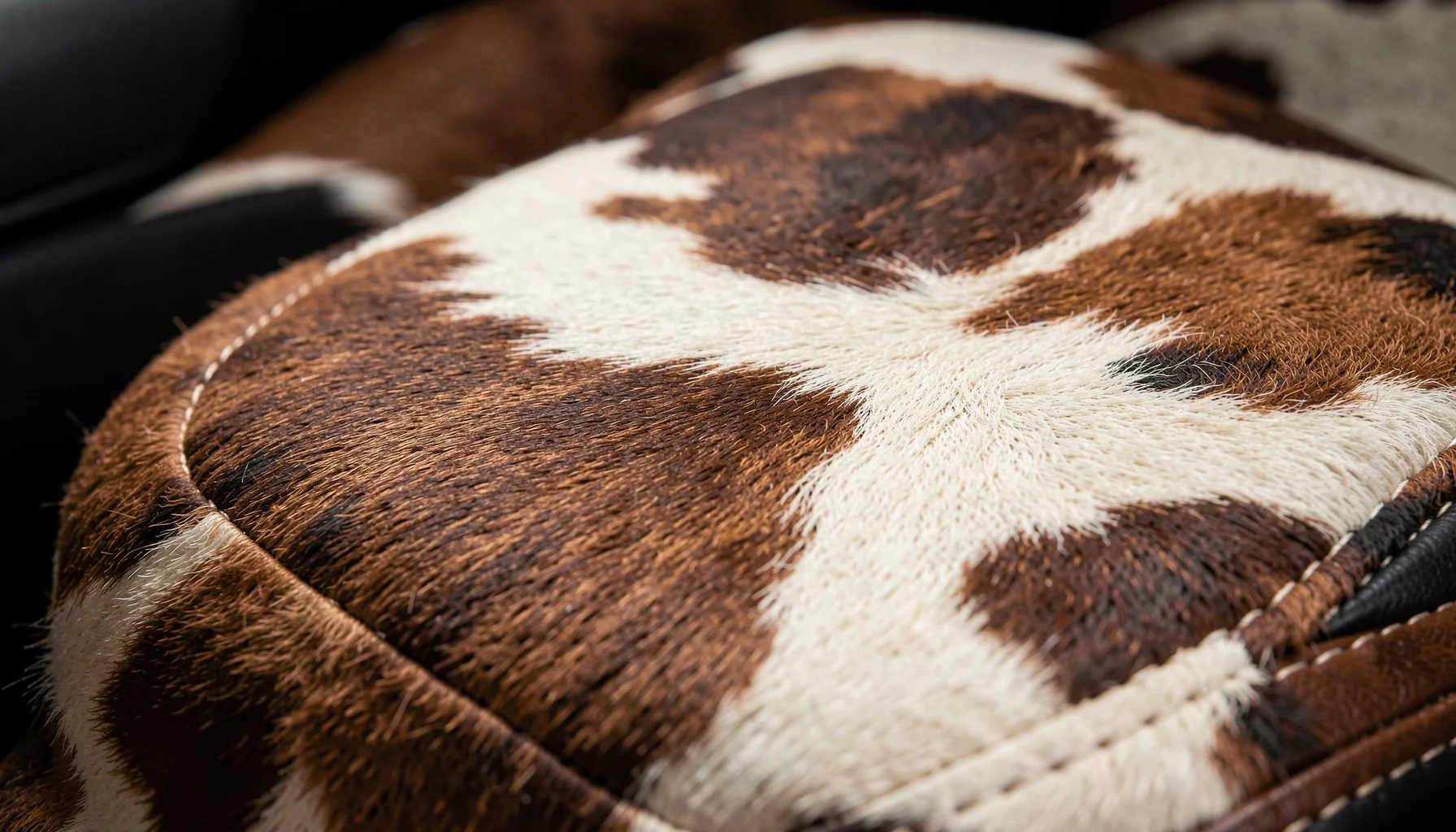
Cowhide print seat covers are interior accessories designed to change the appearance of factory upholstery while helping reduce direct exposure to daily wear. The cowhide-inspired pattern is the primary appeal, making these covers suitable for drivers who want a distinctive, western-inspired, or animal-print interior without replacing the original seats.
The protection is practical but limited. A cover can create a surface barrier against minor spills, dirt, pet hair, and routine friction. However, it should not automatically be treated as waterproof, heavy-duty, or stain-proof unless the individual product listing confirms those specifications.
The product category is generally marketed as standard or universal-style, not custom-fit. That distinction matters because seat shapes, headrests, consoles, seat belts, and adjustment controls vary significantly between vehicles. A cover may improve appearance while still requiring careful checking for fit and movement.
Key benefits in everyday driving
- Interior personalization: The cowhide print creates a noticeable visual change without permanent upholstery modification.
- Surface protection: It may help shield factory upholstery from minor messes and everyday contact.
- Interior refresh: It can make an older cabin feel visually updated.
- Pet and family use: The added layer may be useful where hair, crumbs, or routine spills are common.
- Reversible styling: Removing the cover generally allows the original upholstery to remain visible.
YourCarButBetter’s perspective is that the pattern should be evaluated as a style-and-protection solution, not as a replacement for professionally engineered upholstery. Drivers should review the exact listing for material composition, included components, and stated vehicle limitations. Material may vary by product, including fabric, faux leather, polyester, or a blend, so assumptions about softness, breathability, or washing should be avoided.
The cowhide car seat covers product page should be checked for current product-specific information before purchase. For broader fit and care considerations, YourCarButBetter also provides a complete guide to car seat covers.
Fit, Specifications, and Installation Workflow
The most important part of this cowhide print car seat covers review is compatibility. Before installation, confirm that the cover suits the vehicle’s seat design and does not obstruct seat belts, controls, headrests, or side-impact airbag locations.
| Review factor | What to verify | Practical implication |
|---|---|---|
| Product category | Standard or universal-style construction | Expect general coverage rather than vehicle-specific shaping |
| Pattern | Cowhide-inspired print | Primarily an interior styling feature |
| Material | Confirm on the individual listing | Cleaning, comfort, and durability depend on the stated material |
| Seat configuration | Headrests, seat belts, consoles, and controls | Some layouts may require a different cover design |
| Side-impact airbags | Check the vehicle manual and product documentation | Do not assume airbag compatibility |
| Protection purpose | Daily dirt, minor spills, pet hair, and friction | Avoid describing the cover as waterproof without documentation |
| Fastening method | Straps, hooks, elastic bands, or listed hardware | Correct securing helps reduce shifting |
| Care method | Follow product-specific instructions | Spot clean or machine wash only when expressly permitted |
A practical installation sequence
Step 1: Inspect the vehicle seats.
Identify integrated seat belts, side-impact airbags, fixed or non-removable headrests, folding functions, and seat-mounted controls. These features can affect whether a cover is appropriate.
Step 2: Read the product limitations.
Compare the product description with your seat configuration. Do not rely only on the vehicle’s make and model because interior layouts can differ across trims and model years.
Step 3: Test the cover before fully securing it.
Position the cover over the seat back and bottom. Check whether seams, openings, and edges align with the intended seat areas without blocking controls or belt access.
Step 4: Secure all provided attachments.
Use the supplied straps, hooks, or elastic bands as instructed. Fastening points should be distributed evenly so the cover sits flat and is less likely to shift during entry, exit, or normal driving.
Step 5: Check movement and access.
Slide the seat through its normal range and verify that the cover does not interfere with adjustment levers, folding mechanisms, seat belts, or headrest movement.
Step 6: Recheck after use.
After the first few drives, inspect the attachment points and seating position. If the cover bunches, twists, or moves into a restricted area, stop using it until the issue is resolved.
Step 7: Clean according to the material.
Use the stated care instructions. A damp-cloth spot clean may be appropriate for some materials, while machine washing is suitable only when specifically allowed. Avoid harsh chemicals that could damage the print or surface.
Airbag safety deserves particular attention. These covers are not inherently certified for side-impact airbag deployment. Unless the specific product documentation explicitly states airbag compatibility with verified testing information, do not assume the cover is designed to accommodate an airbag. Always consult the vehicle owner’s manual before installation.
Is the Cowhide Style Worth Choosing in 2026?
Cowhide print seat covers are worth considering when visual personalization is the main goal and the vehicle owner is willing to verify fitment carefully. They are less suitable for buyers seeking guaranteed vehicle-specific shaping, documented airbag engineering, or confirmed waterproof performance.
The strongest use case is an older or heavily used interior that needs a noticeable visual refresh. The pattern can also suit drivers who prefer western, ranch, country, or animal-inspired styling. Because the print is bold, it may work best when the rest of the cabin is kept relatively simple.
Practical buying recommendations
- Verify the material first: Material affects cleaning, texture, comfort, and everyday suitability.
- Measure expectations, not just seats: A standard-style cover may not follow every contour or attachment point.
- Prioritize safety access: Seat belts, airbags, headrests, and controls must remain properly accessible.
- Inspect the fastening system: More secure attachment points generally make daily use easier, but only when installed correctly.
- Avoid unsupported performance assumptions: Do not infer waterproofing, heat resistance, UV protection, certification, or heavy-duty construction from the pattern alone.
- Keep the original upholstery in mind: Covers are accessories, not a substitute for repairing damaged foam, seams, or seat mechanisms.
- Plan for maintenance: Regular light cleaning is usually more practical than waiting for dirt or spills to build up.
For 2026, the useful benchmark is not a universal performance percentage; it is transparent product information. Buyers increasingly need clear material details, realistic fitment guidance, care instructions, and safety limitations before purchasing an interior accessory. A product that communicates these points accurately is easier to evaluate than one relying on vague claims.
From YourCarButBetter’s standpoint, the cowhide design is a reasonable choice for style-focused drivers who understand the trade-offs of standard-style coverage. The best purchase decision comes from matching the cover to the seat layout, confirming the product’s documented features, and treating installation as part of the safety review—not as an afterthought.
FAQ
Are cowhide print car seat covers universal?
Many products in this category are marketed as standard or universal-style covers, but “universal” does not guarantee compatibility with every vehicle. Check the listing against your seat configuration, headrests, belts, consoles, controls, and airbags. Confirm the exact limitations before ordering, particularly for vehicles with unusual or integrated seat designs.
Can I use cowhide print seat covers with side-impact airbags?
Do not assume they are airbag-compatible. Unless the specific product documentation provides an explicit compatibility statement supported by verified testing information, consult your vehicle owner’s manual and avoid covering areas where a seat-mounted side-impact airbag deploys. Safety access should take priority over appearance or convenience.