

How to Stop Car Seat Covers From Sliding: Practical Fixes
Posted by YourCarButBetter on
To stop car seat covers from sliding, first tighten every strap and elastic loop, then push any included anchoring discs into the gap between the seat back and bottom. Secure hooks to the seat frame where possible, and smooth the cover from the center outward. If it still shifts, check for worn hardware or consider a suitable non-slip underlay—without blocking airbags or seat sensors.
Why Seat Covers Shift—and Why It Matters
Car seat covers usually move because they are not anchored tightly enough, their materials slide against the original upholstery, or their straps and clips have worn out; troubleshooting rear seat cover installation can help pinpoint and fix the cause. Identifying the cause helps you choose a fix that addresses the movement rather than repeatedly pulling the cover back into place.
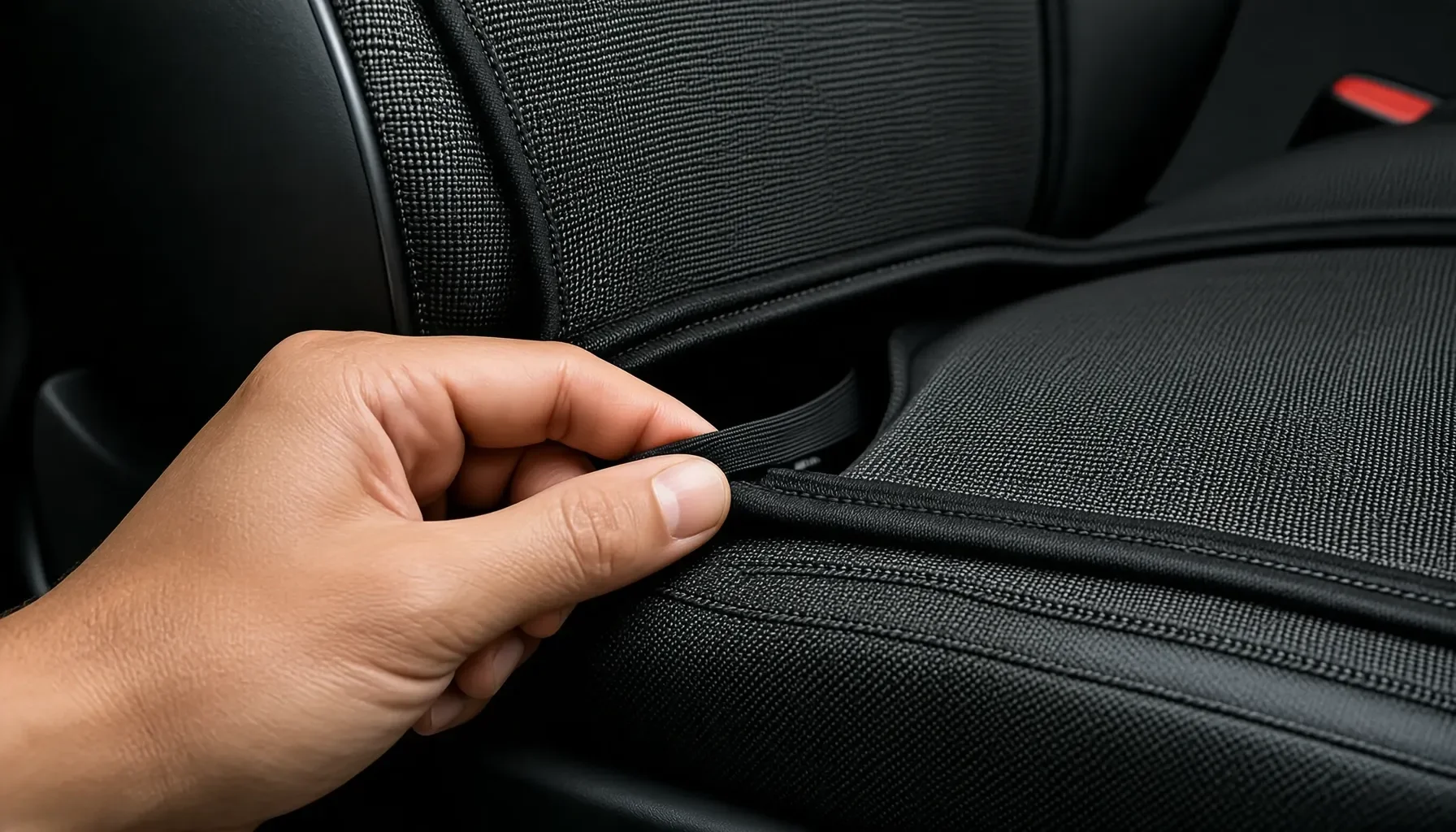 How to Stop Car Seat Covers From Sliding: Practical Fixes - Why Seat Covers Shift—and Why It Matters
A cover can shift when its backing and the factory seat surface are both smooth, such as synthetic fabric against leather or vinyl. Loose straps can also leave enough slack for the cover to creep forward or bunch up as you sit down. Repeated entry and exit, children climbing into the back seat, and active pets can make the problem more noticeable.
Movement is more than a cosmetic nuisance. A shifting cover can feel uncomfortable, distract the driver, or move near a seat belt buckle. Some seats also have side-impact airbags or seat-integrated sensors, so a fix must not obstruct their operation.
Before adjusting anything, check how the cover is designed to attach and locate its straps, loops, hooks, and any foam or plastic anchoring discs. If you need a broader overview of cover fit and care, see this guide to car seat covers. Do not assume that a cover or attachment method is compatible with every seat: follow the cover and vehicle instructions, especially around airbags and sensors.
How to Secure a Car Seat Cover That Keeps Sliding
The most useful fixes are to retension the cover, tuck its anchors into the seat crevice, and attach hooks to a secure point under the seat. Work through the checks below in order, then test the cover by sitting down and getting up as you normally would.
| What to check | Practical action | What it helps address |
|---|---|---|
| Straps and elastic loops | Tighten each one so the cover sits firmly against the seat base and backrest | Slack and poor tension |
| Anchoring discs | Push each included disc into the gap between the seat back and bottom | The cover pulling forward |
| S-hooks or similar hooks | Attach them to the seat frame or springs underneath the seat, not to another fabric panel | Weak or ineffective anchoring |
| Cover surface | Smooth the material from the center outward after securing the hardware | Folds and air pockets |
| Backing and upholstery | Consider a thin rubberized shelf liner or dedicated non-slip mesh mat if suitable | Sliding between smooth surfaces |
| Attachment hardware | Inspect elastic and clips for lost stretch, cracks, or other damage | Movement caused by wear |
Follow this sequence:
- Find and retighten every attachment. Locate all underside straps and elastic loops, not just the easiest ones to reach. Pull them snug enough to hold the cover against the seat contours, but do not stretch them excessively; too much force can snap elastic or damage seams.
- Set the anchor discs. If the cover includes circular foam or plastic discs, push them firmly into the crevice—or “bight”—between the seat bottom and backrest. These create a mechanical lock that helps stop the cover from being pulled forward.
- Place hooks securely. Attach S-hooks to the seat frame or springs underneath the seat where the cover design allows. Do not simply hook one part of the cover to another; that may not hold the cover in place.
- Smooth and test. Work from the middle of the cover outward to remove folds and air pockets. Sit down and get up, then check whether it has shifted and whether buckles and controls remain accessible.
If your cover has no anchors or the installation remains unclear, consult its instructions. These step-by-step seat cover installation tips can help you review the basic setup.
Non-Slip Options, Safety Checks, and Routine Care
If proper anchoring and tension do not solve the problem, friction between the cover and upholstery may be the issue. A suitable non-slip layer can help, but any added material or attachment must stay clear of seat airbags, seat-integrated sensors, and seat belt retractors.
A thin rubberized shelf liner or dedicated non-slip mesh mat placed between the seat and cover may increase friction. Keep it flat and use only an arrangement that does not bunch up or interfere with the cover’s intended fit. Avoid assuming that a grippy layer is safe for every seat or cover; check the relevant instructions.
Adhesive-backed hook-and-loop tape is another possible option when the seat and cover materials allow it. Treat it as a semi-permanent modification, not a universal fix. Do not put adhesive or added material where it could affect a side-impact airbag’s deployment path or a seat-integrated sensor. If you cannot confirm the location is safe, do not modify that area.
A few practical habits can reduce recurring movement:
- For pet owners: Check the cover after pets climb in or move around, since vigorous activity can dislodge it.
- For families: Recheck the seat after children get in and out frequently, especially if they press or pull on the cover.
- For frequent drivers: Inspect the anchors during monthly interior cleaning or vacuuming.
- For any driver: Replace or repair worn elastic and damaged clips using an appropriate solution rather than compensating by overtightening.
After each adjustment, confirm that the cover stays in place during normal use, seat belt buckles remain reachable, and no attachment obstructs the seat’s safety features. If movement continues despite correct installation, the cover’s attachment design or its match with the upholstery may be contributing; avoid improvised fixes that compromise safety.
FAQ
Can I put a non-slip mat under a car seat cover?
A thin rubberized shelf liner or dedicated non-slip mesh mat may help increase friction between the seat and cover. Keep it flat and make sure it does not interfere with seat-mounted airbags, seat-integrated sensors, or seat belt retractors. Check the cover and vehicle instructions before adding anything.
Why does my seat cover keep sliding forward?
Common causes include loose straps, unused anchoring discs, hooks attached only to fabric, or smooth materials sliding against one another. Worn elastic or damaged clips can also reduce tension. Check each attachment, secure the anchors as intended, and inspect the hardware before considering a non-slip layer.