

Rubber vs Carpet Car Floor Mats: Which Is Better for Your Vehicle?
Posted by YourCar Better on
Rubber mats are the better choice for drivers who regularly deal with rain, snow, mud, spills, or heavy foot traffic; carpet mats are better for those who prioritize a plush, coordinated cabin in mostly dry conditions. In this rubber vs carpet car floor mats comparison, rubber wins on cleanup and wet-weather protection, while Carpet Car Floor Mats offer a more traditional interior look and a comfortable finish. The right choice depends on your climate, routine, and expectations for maintenance, so it’s helpful to know how to care for all-weather floor mats.
Design and Build: What Are These Mats Made For?
Rubber mats are built to contain moisture and debris, while carpet mats are designed to complement a vehicle’s interior and provide a softer surface. Material, edge design, backing, and fit all affect how each type performs in everyday use.
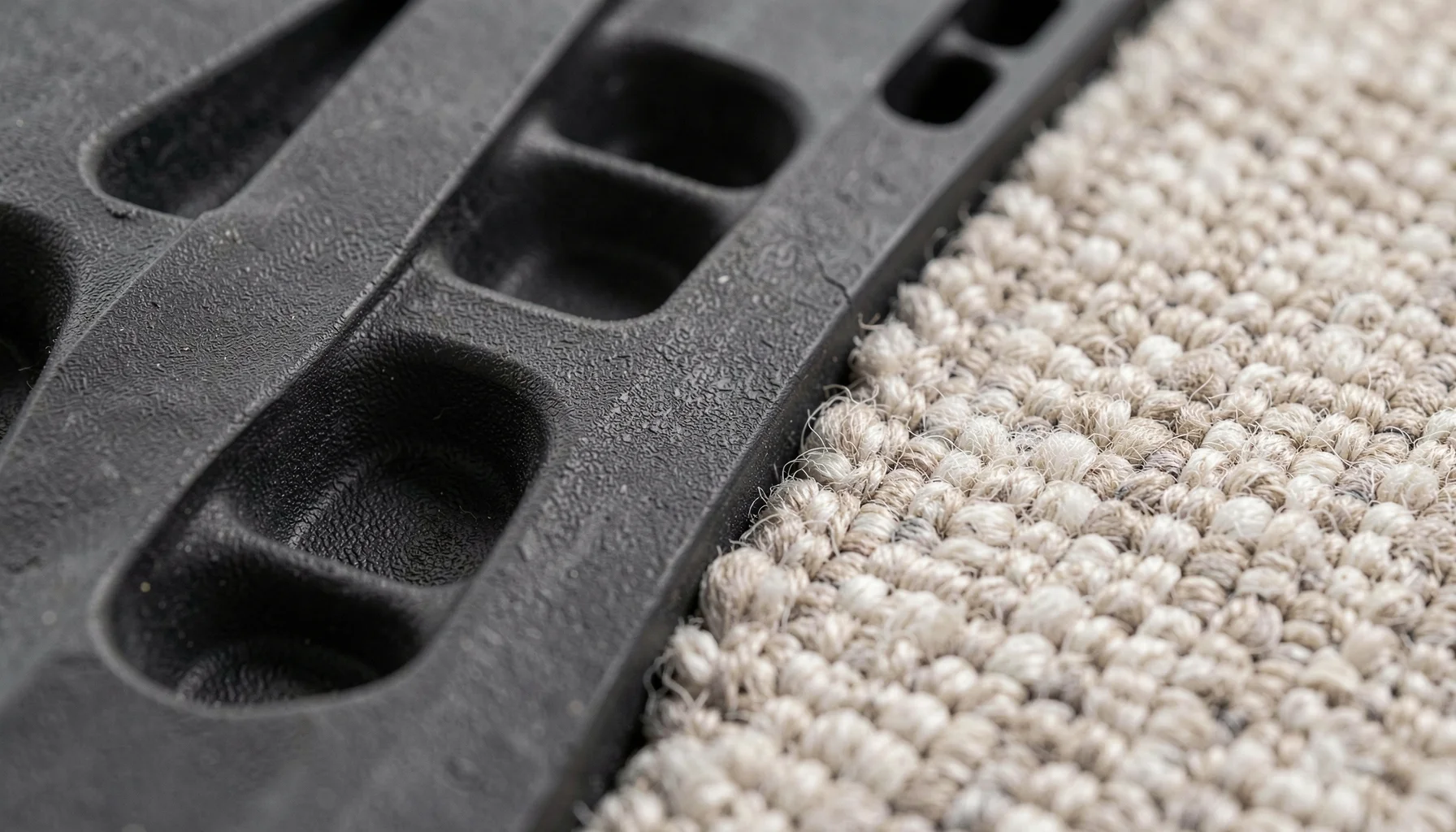 Hình: Rubber vs Carpet Car Floor Mats: Which Is Better for Your Vehicle? - Design and Build: What Are These Mats Made For?
How do their materials and construction differ?
Rubber floor mats are commonly made from thermoplastic elastomer (TPE) or vulcanized rubber. Many have raised channels, ridges, or wells that help contain mud, water, road salt, and snow rather than letting them spread onto factory carpeting.
Carpet Car Floor Mats are usually made from nylon, polyester, or polypropylene fibers. Depending on the product, they may have a non-slip rubberized or spiked backing, reinforced binding around the edges, and a finish selected to coordinate with the cabin. Carpet fibers provide a more familiar, finished look, but can hold moisture and odors.
Neither material automatically guarantees a good fit. Universal mats may be designed to trim to size, while custom-fit mats are made for a specific vehicle’s floor shape. YourCarButBetter’s carpet mats, for example, are described as laser-cut to vehicle make, model, and year specifications.
Why does fit matter as much as material?
A mat that shifts, bunches, or interferes with the pedals is not a safe choice, regardless of whether it is rubber or carpet. Check that the mat is intended for your exact vehicle and can connect to its factory retention posts or clips.
Before buying, verify:
- Vehicle fitment: Confirm the year, make, and model, and check whether the set covers the front row or the full cabin.
- Retention compatibility: Look for openings or hardware that work with the vehicle’s factory mat anchors.
- Coverage: Consider whether the mat’s shape and raised edges suit the areas where dirt and moisture collect.
- Installation: Remove the old mats and secure the new ones as directed. Never layer a new mat over an existing one.
Key Features and Performance Benchmarks
For trapping and removing wet messes, rubber generally has the practical advantage; carpet has the advantage in texture and interior styling. The best comparison is not a single universal score, but how each material handles the conditions and care routine you actually have.
Which type handles spills, mud, and salt better?
Rubber mats are the more straightforward option for liquid and outdoor debris. Their channels and wells help contain messes, and the mats can be removed and rinsed with a hose or cleaned with mild soap. They generally require less effort after a spill than fabric mats.
Carpet fibers can absorb liquid and are more vulnerable to staining, odor, and matting over time. If moisture remains trapped, mold can become a concern. Regular vacuuming helps with loose dirt, but spills may call for deeper shampooing and enough time for the mat to dry; similar fabric-care advice applies when you clean car seat covers.
The difference is especially relevant in winter or rainy seasons. Road salt, slush, and wet footwear are easier to manage with rubber, while a carpet mat may need more frequent cleaning to stay fresh and presentable.
How do comfort, appearance, and durability compare?
Carpet feels softer underfoot and can better match the original cabin trim, alongside well-chosen car seat covers. It may also suit drivers who want color options, a plush finish, or a more tailored appearance. However, frequent friction can flatten the fibers, and stains or embedded odors can be difficult to remove completely.
Rubber prioritizes utility. It resists many common wet-weather messes, salt, and temperature fluctuations, though its molded appearance may not appeal to drivers seeking a traditional carpeted interior. Some textured TPE designs bridge that visual gap, but product appearance varies.
In high-traffic, high-moisture environments, rubber mats can last substantially longer; the available comparison guidance estimates a lifespan advantage of roughly 3:1 over carpet in those conditions. Treat that as a context-specific benchmark, not a guarantee: actual life depends on use, fit, care, and product construction.
| Comparison criterion in English | rubber vs carpet car floor mats | Carpet Car Floor Mats | Verdict in English |
|---|---|---|---|
| Typical material | TPE or vulcanized rubber | Nylon, polyester, or polypropylene fibers | Choose based on whether utility or a textile finish matters more |
| Wet-weather performance | Channels and wells help contain water, mud, and snow | Fibers can absorb moisture and may need more drying | Rubber for frequent rain, snow, or mud |
| Spill cleanup | Remove, rinse, or wash with mild soap | Vacuum; spills may require shampooing and drying | Rubber is easier to clean after liquid spills |
| Interior appearance | Practical molded finish; some textured styles look more refined | Plush, trim-matching finish; may include piping or logos | Carpet for a traditional, coordinated cabin |
| Fit and retention | Available fit varies by product; check anchors and coverage | Custom options may be cut for a specific vehicle and use factory retention hardware | Verify exact vehicle fit and secure attachment for either type |
| Maintenance | Rinse or wipe clean; typically no fabric drying routine | Vacuum and periodically deep-clean; can retain odors | Rubber requires less intensive routine care |
| Durability in wet, high-traffic use | Better suited to repeated exposure; may last longer in these conditions | Fibers can stain, flatten, and wear | Rubber has the edge for demanding use |
| Price and value | Cost varies by material, fit, and set; may reduce cleaning effort | Cost varies by fit, set size, and finish; promotions may apply | Compare complete-set pricing and expected upkeep |
| Ideal audience | Families, outdoor users, rideshare drivers, and wet-climate commuters | Drivers who value cabin appearance and drive mostly in dry conditions | Match the mat to your routine, not just its material |
Real-World Usability: Pros, Cons, and Everyday Trade-Offs
The best mat is the one you can keep clean, secured, and suited to your driving conditions. Rubber simplifies messy routines, while carpet can make a clean, dry cabin feel more finished—but each has limitations worth considering.
What are the pros and cons of rubber mats?
Pros
- Easy cleanup: Rinsing or washing is generally simpler than shampooing absorbent fibers.
- Wet-weather protection: Raised channels and wells help contain mud, water, and snow.
- Resilience: Rubber is highly resistant to salt, many chemical spills, and temperature changes.
- Practical for busy vehicles: A useful choice for families, outdoor activities, and rideshare use.
Cons
- Less plush: The molded surface does not offer the soft feel of carpet.
- Style may be a compromise: A utilitarian look may not suit every interior.
- Fit still matters: A poorly fitting mat can shift, so confirm retention points and coverage rather than assuming all rubber mats are interchangeable.
What are the pros and cons of Carpet Car Floor Mats?
Pros
- Softer surface: Carpet provides a more comfortable, traditional feel underfoot.
- Interior coordination: Colors, pile, and edge finishing can complement a vehicle’s trim.
- Custom-fit options: Vehicle-specific cuts and factory-retention compatibility can give the cabin a tailored appearance.
- Useful for refreshing a vehicle: New mats can improve the look of a worn or dated interior.
Cons
- More involved cleaning: Vacuuming and periodic deep-shampooing take more work than rinsing rubber.
- Absorbs spills and odors: Liquid can linger in the fibers if it is not cleaned and dried thoroughly.
- Wear is visible: High-traffic areas can flatten or show fiber wear, and staining may not fully come out.
- Not ideal for constant wet use: Repeated moisture increases the risk of lingering dampness and unwanted odor.
A practical example: a driver carrying muddy sports gear most weekends is likely to appreciate rubber’s easier cleanup. Someone commuting in a dry climate who wants mats that match the cabin may prefer carpet—and should plan to vacuum and clean spills promptly.
Value for Money: Which Should You Buy?
Value depends on more than the purchase price: consider fit, set size, cleaning effort, durability in your conditions, and how much you value interior appearance. There is no single price or lifespan that applies to every vehicle and product, so compare the specific set and your expected use.
How should you compare the total cost?
Prices can vary with vehicle complexity, material, design, and whether you buy front-row mats or a full-cabin set. Custom carpet mats may also differ in pile, color, or trim options, while promotional pricing and bundle discounts may affect the final cost.
Instead of relying on a broad price claim, compare:
- What the set includes: Front mats only or full-cabin coverage?
- How it fits: Is it vehicle-specific, or a universal mat that may need trimming?
- How often it needs care: Will you rinse it occasionally or vacuum and shampoo it regularly?
- What it protects against: Is your main concern everyday dust, or recurring water, salt, and mud?
- How long it should serve your needs: In demanding, wet conditions, rubber’s durability can make it the stronger long-term value.
If preserving factory carpeting is a priority, a fitted set installed early can help limit staining and wear. Some drivers also use a seasonal swap: rubber during winter or rainy months, then carpet during drier weather. That approach offers flexibility, but requires storing the mats not in use.
Which mats should you choose for your driving routine?
Choose rubber vs carpet car floor mats by prioritizing the conditions you face most often:
- Choose rubber if you regularly drive through rain, snow, mud, or road salt; transport children or outdoor gear; or want the simplest cleanup after spills.
- Choose Carpet Car Floor Mats if your climate is mostly dry, interior appearance and a soft finish matter more, and you are willing to vacuum and deep-clean when needed.
- Consider a seasonal swap if your needs change considerably between wet and dry months.
- Check fit and retention before buying whichever material you choose. Remove old mats, attach the new ones to the factory retention hardware, and confirm they cannot interfere with pedal movement.
For drivers looking to refresh their cabin, YourCarButBetter offers vehicle-specific carpet mat options. Use its vehicle selector to check the available fit for your year, make, and model, then confirm the set size and retention compatibility before ordering. If visual customization matters, you can also browse ideas in this guide to floral car mats.
FAQ
Rubber is generally the more practical choice for wet, messy use, while carpet is better suited to drivers who prioritize a soft, coordinated interior. These answers address the most common fit, safety, and maintenance questions.
Are rubber or carpet car floor mats easier to clean?
Rubber mats are usually easier to clean after mud or liquid spills: remove them, rinse them, and use mild soap if needed. Carpet mats typically need vacuuming, and spills may require shampooing and thorough drying.
Do carpet car mats protect the factory carpet?
Yes. Carpet mats provide a protective layer against everyday dirt and friction, but they can absorb spills and moisture. Fit them securely and clean stains promptly to help prevent lasting marks or odors.
Are rubber mats always more durable than carpet mats?
Not in every situation. Rubber generally has the durability advantage in high-traffic, high-moisture use, where it can last roughly three times as long according to the available comparison guidance. In cleaner, drier conditions, the difference may be less relevant; product quality, fit, and care also matter.
Can I put rubber mats over my existing carpet mats?
No. Never stack floor mats. Using one mat over another can cause movement or pedal obstruction. Remove the old mat, install the replacement using the intended factory retention hardware, and make sure it is secure before driving.
Should I choose custom-fit or universal mats?
Choose a mat designed for your vehicle when you want a closer fit and compatibility with factory retention points. Universal mats may be trimmable, but you still need to verify their coverage and ensure they cannot shift or interfere with the pedals.