

Universal vs Semi-Custom Car Seat Covers: Fit and Coverage
Posted by YourCarButBetter on
Universal covers are usually the better choice for a tight budget, temporary use, or an older vehicle with limited pattern availability. Semi-custom car seat covers are generally better for a closer fit, a cleaner appearance, and seats with identifiable configurations. Before choosing either, check your seat dimensions and features—especially airbags, headrests, armrests, and split benches—because fit and safety depend on compatibility, not just the cover’s size.
Universal vs. Semi-Custom: Fit, Features, and Installation
Universal covers are designed to stretch across a broad range of seats; semi-custom covers use patterns for specific vehicle and seat configurations. That distinction affects how closely a cover fits, how it installs, and whether it accommodates features such as a 60/40 split bench or seat-mounted controls.
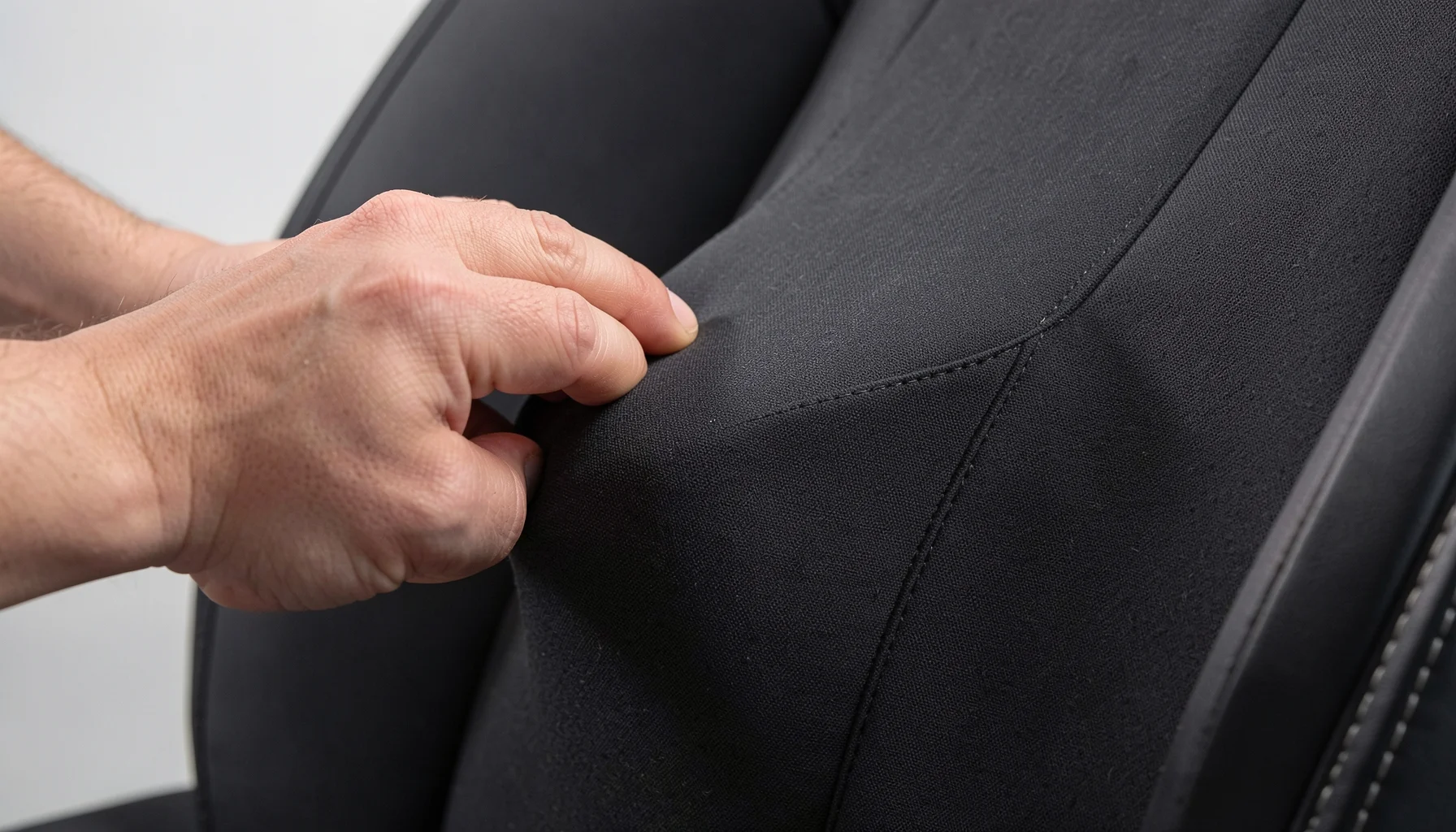 Universal vs Semi-Custom Car Seat Covers: Fit and Coverage - Universal vs Semi-Custom Car Seat Covers: Fit, Features, and Installation
| Criterion | universal vs semi-custom car seat covers | Semi-Custom Car Seat Covers | Verdict |
|---|---|---|---|
| Typical price | Universal sets: $20–$60 | Semi-custom sets: $80–$200 | Universal costs less upfront; semi-custom costs more for a closer pattern match. |
| Fit | Broad, one-size-fits-many fit; may gap or bunch around contours | Pattern-matched to a seat category or configuration; generally snugger, but not exact | Choose based on seat shape and fit expectations. |
| Core features | Elastic edges, straps, and hooks | Configuration-specific cutouts and openings may accommodate features such as armrests and seat belts | Confirm the pattern includes your seat’s features. |
| Seat compatibility | Often intended for standard bucket seats; complex controls and integrated airbags can be problematic | Patterns may suit common bucket seats and split benches; airbag compatibility must be stated by the manufacturer | Verify compatibility for the exact seat and safety equipment. |
| Installation | Typically 5–10 minutes; drape and secure | Typically 20–45 minutes; align openings, fasten straps, and tension the cover | Universal is quicker; semi-custom takes more adjustment. |
| Main limitation | Loose fit and possible interference with seat features | May still miss details such as lumbar knobs, seat-back pockets, or power controls | Neither option should be assumed to fit every seat. |
Universal describes a broad-fit product category, while semi-custom describes covers patterned for a narrower range of seat configurations. Semi-custom does not mean made to the exact contours of one specific seat. For a broader overview of cover materials, fit, and care, see YourCarButBetter’s complete car seat cover guide.
How should you check seat dimensions and compatibility?
Start with your vehicle’s year, make, model, and trim, then compare the cover maker’s fitment details with the actual seat. Check whether the front seats are bucket or bench-style and note fixed or adjustable headrests, armrests, seat-belt openings, lumbar knobs, seat-back pockets, and power controls. For the rear seat, identify the split configuration, such as 60/40.
A product described as “universal” may still not suit a seat with unusual contours or integrated features. A semi-custom pattern can be more specific, but it may not account for every control or pocket. Read the manufacturer’s compatibility information rather than relying on a general size label.
What does installation involve?
Universal covers are generally draped over the seat and secured with elastic loops and hooks. Semi-custom covers require closer alignment: match the openings to the seat features, feed straps through the seat-back gap where applicable, tighten the fasteners, and tuck excess material for a neater finish. Allow roughly 5–10 minutes for a typical universal installation and 20–45 minutes for semi-custom, based on the comparison benchmarks.
Before and after installation, check that the cover stays in place and does not obstruct seat-belt buckles or interfere with controls. Most importantly, do not cover a side-impact airbag deployment area unless the manufacturer specifically identifies the cover as compatible with that seat’s airbag system.
Price, Protection, and Practical Value
Universal covers have the lower listed purchase price, while semi-custom covers cost more but are patterned for a narrower range of seat configurations. The better value depends on how well the cover fits your seat, how you use the vehicle, and whether the product accommodates its safety and convenience features.
The provided market benchmarks put universal sets at $20–$60 and semi-custom sets at $80–$200. These are category ranges, not quotes for a particular product. No product-specific warranty, lifespan, or replacement-cost information is available here, so a precise total-cost-of-ownership calculation would be misleading. Instead, compare the purchase price with fitment, material, care instructions, and the cost of replacing a cover that does not work with your seat.
Semi-custom options are available in materials such as neoprene, faux leather, ballistic nylon, velour, and tweed. Material affects practical considerations—such as cleaning and the intended use—but no material should be assumed waterproof or machine-washable without product-specific confirmation. Universal covers also vary by material; a lower category price alone does not establish how well a specific cover will hold up.
For pet travel, commuting, or frequent passenger use, a snugger pattern may help reduce shifting and bunching. For a temporary vehicle, an older car, or a fleet where low upfront cost matters most, universal covers may make more sense. In either case, protection depends on coverage and fit: inspect the seat for gaps, confirm the cover stays secure, and follow the maker’s care instructions.
Value checklist before buying:
- Compare the exact vehicle and seat configuration with the product’s fitment information.
- Check which rows and headrests are included; sets may cover the front, rear, or full interior.
- Confirm how the cover handles airbags, seat belts, armrests, and controls.
- Review material and cleaning details instead of assuming a feature from the material name.
- Weigh the upfront price against the fit and features you actually need.
A higher price does not automatically mean a safer or exact fit. A semi-custom cover still needs to be specified for the correct pattern group, and airbag compatibility should be explicitly stated by its manufacturer. If that information is missing, contact the seller before installing the cover.
Strengths, Limitations, and Which Should You Choose?
Choose universal covers when a lower upfront price and quick installation matter more than a close, vehicle-specific fit. Choose semi-custom covers when you want a more contoured appearance and can match the product to your seat configuration. Neither category is automatically right for every vehicle: fitment details and airbag compatibility should decide the final purchase.
Universal covers: strengths
- Lower typical price: $20–$60 per set.
- Broad availability for common seat shapes.
- Faster, simpler installation, typically 5–10 minutes.
- Practical for temporary use, older vehicles, and cost-conscious fleet needs.
Universal covers: limitations
- May sit loosely, leave gaps, or bunch around complex contours.
- May not accommodate integrated airbags or electronic seat controls.
- A general fit label does not confirm compatibility with your particular seat.
Semi-custom covers: strengths
- Patterned for a narrower range of vehicle seat configurations.
- Often provide a snugger look and may include openings for features such as armrests and seat belts.
- Available in varied materials for different everyday needs.
- Useful for drivers who want more tailored coverage without choosing made-to-order custom covers.
Semi-custom covers: limitations
- Higher typical price: $80–$200 per set.
- Installation takes longer, typically 20–45 minutes.
- May still require adjustments around lumbar controls, pockets, or power-seat controls.
- Compatibility varies by product; “semi-custom” alone does not establish airbag safety.
A practical buying sequence:
- Identify the seat: Record whether it is a bucket or bench, whether headrests are fixed or adjustable, and whether the rear bench is split.
- List features: Note armrests, seat-belt openings, pockets, lumbar knobs, seat-mounted controls, and side-impact airbags.
- Match the pattern: Use the manufacturer’s year, make, model, trim, or pattern-group lookup. Do not select based on dimensions or appearance alone.
- Check safety and coverage: Confirm the maker’s airbag guidance and which seats and headrests the set includes.
- Choose by priority: Pick universal for basic, lower-cost coverage; choose semi-custom for a closer pattern match when the listed configuration fits.
YourCarButBetter recommends treating fitment as a feature, not an assumption. For daily drivers, pet owners, and people refreshing worn upholstery, semi-custom can be a reasonable middle ground if the pattern matches. For short-term use or older vehicles, universal may be the more practical purchase. In both cases, follow installation instructions and verify that the installed cover does not obstruct safety equipment.
FAQ
Are semi-custom car seat covers an exact fit?
No. Semi-custom covers use patterns designed for a range of vehicle seat configurations, so they generally fit more closely than universal covers but are not made to match every contour of one exact seat. Check the listed pattern and openings against your vehicle’s seats, controls, and other features before ordering.
Can universal or semi-custom covers be used with side-impact airbags?
Only use a cover if its manufacturer specifically confirms compatibility with the vehicle’s seat-mounted airbag system. Some semi-custom products may use breakaway stitching or designated openings, but the category name alone is not proof. Never let a cover obstruct the deployment area, and check that seat-belt buckles remain accessible.